Blog
How technology is changing farming: 5 key trends of 2025

Digital farm management
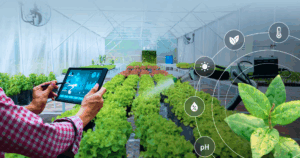
Farm management systems (FMS) integrate everything from crop planning to crop sales.Thanks to integration with sensors, GPS, and financial modules, a farmer can see a complete picture of his business in real time.
Examples:
- Monitoring of equipment via IoT
- Automatic report generation
- Forecasting costs and profits
Farming in 2025 is no longer just about land, rain and seeds. It's about data, analytics, automation, and communities connected by technology. From drones and sensors to blockchain, modern solutions help not only increase yields but also make agribusiness more sustainable and transparent.
«Technology does not replace the farmer, it strengthens his decisions,» says Ivan Kovalenko, PanTerrea's agro-analyst.
Digital farm management
Farm management systems (FMS) integrate everything from crop planning to crop sales.Thanks to integration with sensors, GPS, and financial modules, a farmer can see a complete picture of his business in real time.
Examples:
- Monitoring of equipment via IoT
- Automatic report generation
- Forecasting costs and profits

Data analysis and artificial intelligence
Agriculture is not what it was 20 years ago. Thanks to new agricultural technologies, farmers have tools that make their work easier, faster, and smarter. Let's take a look at how these changes affect the daily lives of farmers.
First, technology saves time and money. Automated systems take over the tedious routine, and farmers can focus on strategy and planning. Secondly, they increase yields - smart solutions help to squeeze the most out of each hectare.
These new products also take care of nature. Less chemicals, less water, less emissions - all this makes agriculture more environmentally friendly. And that's cool, because we all want to live on a clean planet, right?
AI is changing the way we make decisions. Algorithms analyze data on soil, climate, moisture levels, and even consumer behavior.This allows us to optimize sowing campaigns and reduce resource costs.
According to PanTerrea Insights, farmers who have implemented analytical tools have increased their water use efficiency by 27%.
Drones and robotics
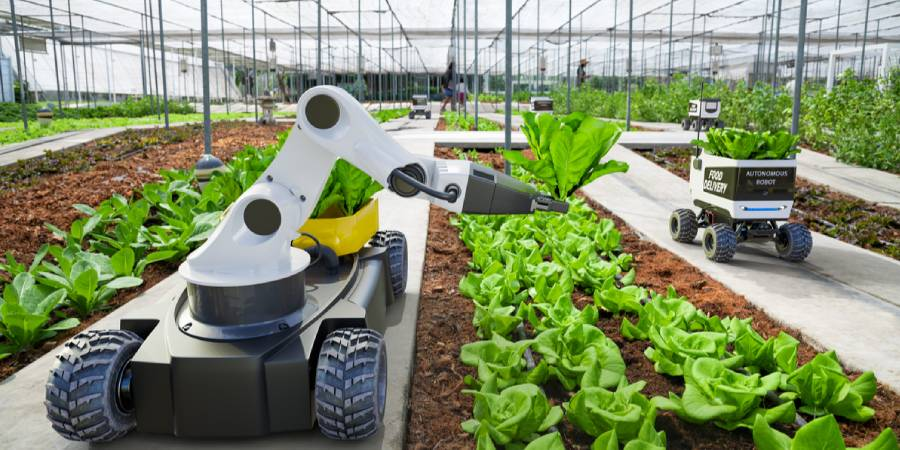
Drones are no longer just “toys” - they are precision farming tools. They monitor the condition of fields, spray areas, and sometimes even sow.Robots perform routine tasks, freeing up time for strategic decisions.
Examples:
- Monitoring of equipment via IoT
- Automatic report generation
- Forecasting costs and profits
Autonomous tractors are new generation high-tech machines equipped with a range of intelligent systems and sensors to ensure full or partial autonomy in operation.
They combine advanced technologies of GPS navigation, LiDAR scanning, high-resolution cameras, ultrasonic sensors and artificial intelligence, which allows them to accurately navigate the field, detect terrain and obstacles, and perform complex agricultural operations without human intervention.
The main advantages of using autonomous tractors are increased productivity due to continuous work without fatigue and reduced risk of human error, which can lead to crop losses or inefficient use of resources. Reducing labor costs is especially important in the face of a shortage of skilled workers in agriculture. Robots also contribute to improved labor safety by minimizing human contact with heavy machinery and chemicals.
Bottom line.
The year 2025 will be a turning point for the agricultural sector.Technology is no longer an “auxiliary tool” - it is becoming the basis of a new farming culture.