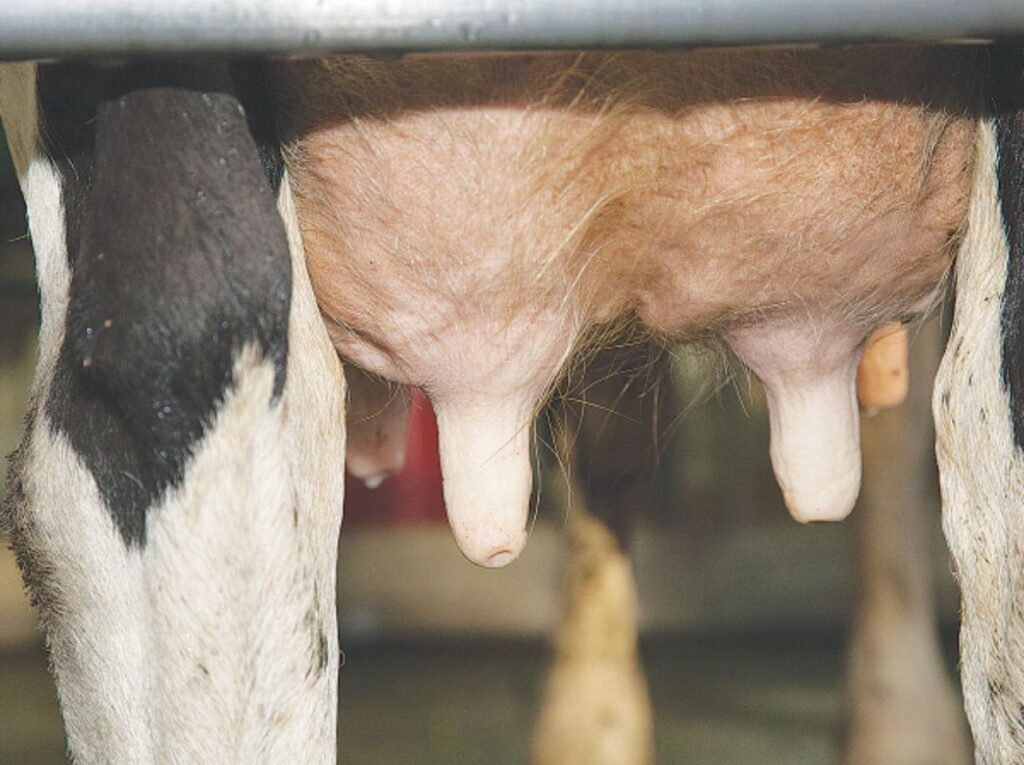
To avoid the disease, it is recommended to use a product for internal teat sealing. It prevents mastitis pathogens from entering the teats, forming a reliable barrier. However, to get the best result from this protection, always follow the manufacturer's instructions for use and removal.
- Treatment of subclinical mastitis during the start-up period
Statistics show that in 60% cases, mastitis in cows diagnosed during lactation occurs due to problems that occurred at the previous stage of dryness. An antibiotic that protects against infections and acts on mastitis pathogens (gram-positive bacteria) helps to cope with the disease and prevent new cases.
If you are one of those farmers who want to minimize the use of antibiotics, you should consider selective therapy for dry cows. This method involves the use of antibiotics not for all cows, but only for those who have an increased risk of infection. In particular, this category includes animals that showed signs of mastitis during the previous lactation period.
- Vaccination against coliform mastitis
A variety of bacteria live in bedding and humus, including coliforms. It is they that lead to the development of severe mastitis in dairy cows (this is confirmed in 70% cases), but vaccination helps to protect animals.
The start-up period is best suited to ensure that all cows are vaccinated, including against coliform mastitis. The effectiveness of the vaccine has been proven in practice, with a reduction in clinical cases of the disease of up to 81%.
- Preparing high-yield cows for launch
Cows that produce the most milk (15 kg or more) are at the highest risk of developing mastitis, so you need to make sure they are ready for it before starting. In particular, to reduce their milk production, it is recommended to give them a mineral bolus orally. In addition, studies show that this method reduces the risk of mastitis in cows during the next lactation period.
- Organizing the right conditions for keeping animals
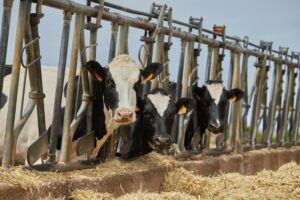
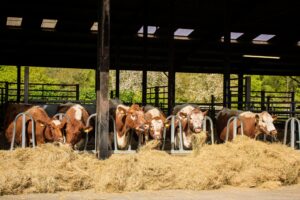
The fact that cows are resting and their udders are recovering during the dry period does not mean that they need less attention. At this time, it is important to provide them with living conditions that make them feel comfortable. In particular, the place where they stay should be clean, so humus should be removed regularly, as well as replacing old bedding with fresh. It is also necessary to keep the aisles and feeding and drinking areas tidy and clean.
It is important to remember that dry cows need a lot of space, so the livestock density should be 85%, or better yet, less, so that each animal has enough space for both feeding and rest. You also need to ensure good ventilation in the building where the animals are kept during the dry season. It should not be too hot in summer and too humid in winter.
If the air in the room smells of ammonia, the animals cough or breathe with their mouths open, and their fur feels damp, this is a sign that ventilation needs to be improved. In addition, heat stress should not be allowed in dry cows, so they should be kept in cool conditions. If necessary, fans and sprayers can be used for this purpose.
- Meeting nutrient needs
After calving and before lactation, cows have fat reserves that begin to be actively consumed. During the dry period, animals are especially in need of replenishing nutrients, so their diet should be designed accordingly.
Since the dry period has several stages, and cows have different needs at each stage, it is necessary to feed animals so that they receive all the necessary substances. As practice shows, the best solution is to feed cows a cationic-anionic differentiated diet during the dry period. This increases dry matter intake at the beginning of lactation, increases milk production, and reduces the incidence of disease in newborn cows.
- Consultation with a veterinarian
The program for your dry cows depends on the specifics of your herd and farm. Your veterinarian is familiar with them, so you should consult him or her to develop a dry cow care protocol or make any changes to it. It is important to remember that each herd should have its own program that takes into account its specific needs and characteristics.
- Conducting trainings for employees
When a program for dry cows is already in place, all farm employees must follow it without deviating from the approved procedures. And to ensure that all team members know exactly what to do, it is useful to conduct trainings for them. In addition, it is important to take into account the following nuances:
- Regular training courses are necessary for everyone, even the most experienced employees, because it is always important to update knowledge;
- It is necessary to explain to employees in detail how they should perform their tasks;
- You should always explain why and for what purpose certain actions are needed, because understanding this helps employees follow the necessary procedures more clearly.
It is also important that the protocols are written in simple and understandable language for employees, so that everyone understands what they are about. When the team works as one well-coordinated mechanism, the result will be positive, and the dry season will be calm for both animals and people.
How PanTerrea will help you
The PanTerrea platform is a place where farmers unite, support each other, share experiences and find answers to their questions about feed, veterinary medicine and more. To become a member of this large and friendly family and find like-minded people, register on the site and use its features to the fullest.
Conclusion.
It is possible to prevent mastitis in cows during the dry period. To do this, it is necessary to organize the right conditions for them, ensure their nutrient needs, consult with a veterinarian about the care protocol, and follow the vaccination schedule. If necessary, antibiotics for the treatment of subclinical mastitis and internal teat sealing products can be used during the start-up period.
If you want to learn even more details about preventing mastitis in cows or share your own experience with other farmers, register on the PanTerrea website and communicate with colleagues on any relevant topics.