Blog
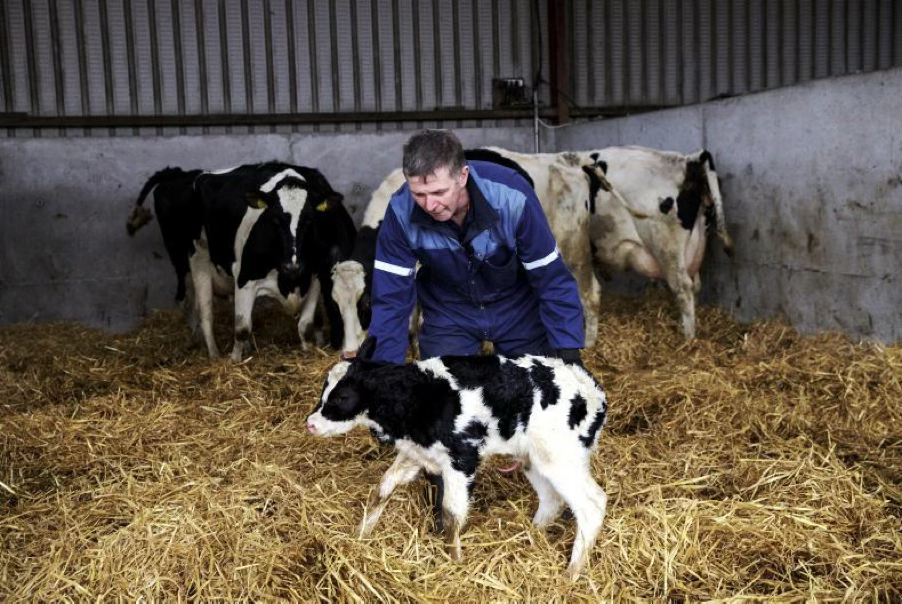
Any dairy farm is like a living organism with many processes going on. And when a malfunction occurs, everything goes wrong. So, when animals start to get sick on the farm, it becomes a real challenge for its workers.
Although the overall health situation of cows on farms has improved somewhat in recent decades, as the number of cases of diseases, such as milk fever, has decreased significantly, the number of sick animals remains the same.
When animals start to get sick, it always causes problems and losses for the farm. In particular, financial ones, as you have to spend a lot of money on treatment. However, it is even worse that cows become less productive due to illness, which can lead to culling. You can read more about this in the article «Culling heifers: when, why and the impact on herd economics», and if you are interested in other farming topics, such as animal feed or something about veterinary medicine, the PanTerrea platform has information on everything.
The concepts of illness and health-related events - is there a difference between them?
When people talk about a disease, they mean a certain deviation from the norm, which can be caused by both the influence of pathogenic factors and metabolic disorders. A disease has manifestations and signs by which it is diagnosed. Examples of diseases common among cows include mastitis, hypocalcemia, lameness, and others.
However, health problems are not limited to diseases, so there is a broader concept of «health-related events» that covers stillbirths, twin births, complications during childbirth, and other phenomena. So these two concepts - disease and health-related events - differ from each other because one is narrower and the other is broader and covers different phenomena. But in both cases, it's a disaster for farms, because these animals have shorter life expectancy and lower productivity.
How cow health problems affect farms
Studies in the United States have shown that health-related events occur in the first 60 days of lactation in 40% dairy cows. This means that farmers and people developing farm management programs need to pay more attention to disease prevention.
When dairy cows start to get sick, it immediately affects the life of the entire farm. This is expressed in two ways:
- a noticeable decrease in milk yields, as animals begin to consume less dry matter, and as a result cannot produce as much milk as before;
- financial losses that entail treatment costs.
In the United States, each case of the disease costs a farm several hundred dollars, which significantly hits the budget, especially if there are several sick animals at once. But that's not all.
Cow diseases also have long-term consequences that reduce farm profits. In particular, diseases that manifest themselves in the first two months of lactation make cows less productive and do not produce enough milk, have lower fertility, and may be culled from the herd.
Experts studying the situation in the farming industry even conducted a global study that showed that every year there are huge losses due to cow diseases. For example, 1.5% of the world's milk volume is lost due to ketosis, and 5.6% due to metritis. The disease also increases the culling rate of cows - by 1.1% with metritis, and by 3% with hypocalcemia.
Diseases of the reproductive system in cows
The reproductive performance of animals is significantly affected by diseases of the reproductive tract. This is confirmed by early studies that showed a correlation between decreased fertilization rates and uterine diseases such as metritis and endometritis.
This is also stated in the scientific literature, which was analyzed by Stephen LeBlanc (representative of the University of Guelph). The books clearly state that reproductive function decreases in cows diagnosed with metritis, endometritis, or purulent vaginal discharge. And the University of Florida studied more than 5,700 cows and found that diseases associated with calving have a stronger negative impact on the restoration of cyclicity than all other diseases.
At the same time, there are other parameters that are also affected by diseases, including pregnancy (from the first insemination) and its loss. And Santos' laboratory has published research showing that the reproductive function of animals suffers regardless of whether their diseases are related to the condition of the uterus or not. This means that animals with clinical metritis or placental retention have the same reproductive disorders as cows with mastitis, lameness, or digestive disorders. And if an animal has several diseases related and unrelated to the uterus at the same time, their reproductive function suffers even more.
The treatment of animals, including cows, is the responsibility of veterinary medicine, and there are certain shifts in the direction of active preventive activities. Today, the emphasis is on active management, and it is more important to maintain the health of the entire animal population than to care for individuals. Therefore, in order for the reproductive efficiency of livestock to be optimal, proper management is required, which will create conditions in which animals remain healthy and comfortable.
Proper management is the main part of the farm's preventive activities. And it includes the following points:
- timely and nutritious meals;
- clean premises for cows, where conditions are created for their comfortable stay;
- low density of animals per unit area.
When each cow has enough space to rest, is fed regularly, has its bedding changed, and has a clean room, it means that the process is being managed properly.
How to optimize the reproductive efficiency of cows
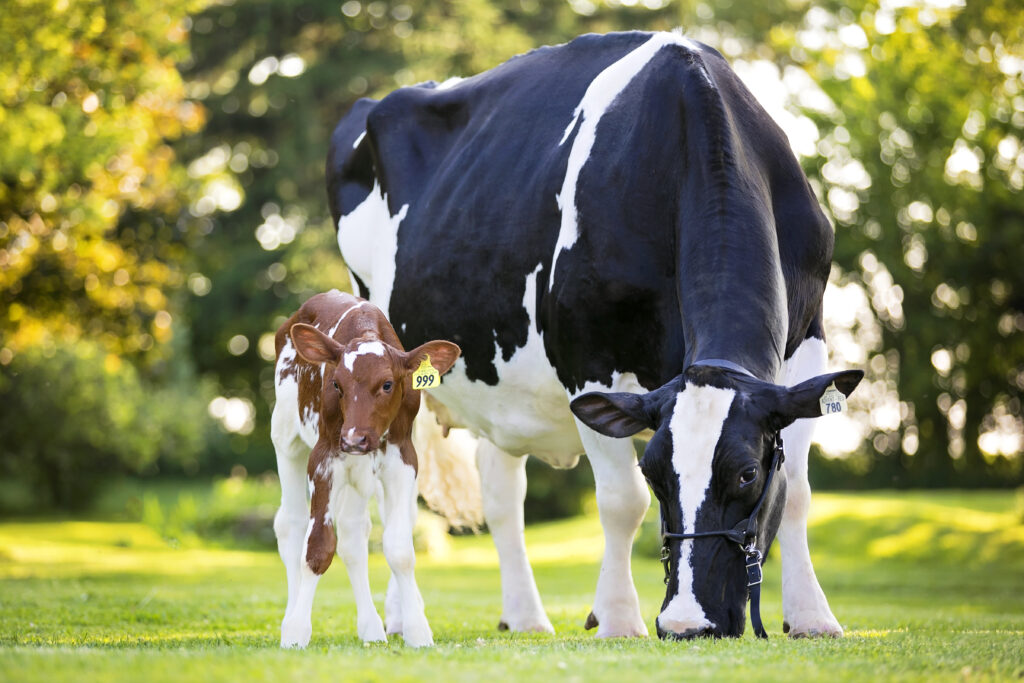
The best thing to do to optimize the reproductive efficiency of animals is to prevent diseases, but not all farms can do this. Those who need to significantly improve the conditions on the farm, for example, build a new barn, will have to spend a lot of money and time on this. Therefore, targeted reproduction management of cows that have had health problems after lactation is more relevant for them. This involves early assessment of the uterus' cycle and condition, as well as hormonal treatment.
In cases where the cow did not become pregnant after the first insemination, the procedure will have to be repeated, but the ovarian structure will be analyzed, following the resynchronization program.
In general, it should be said that to increase fertility, animals should receive a balanced diet with plenty of minerals and vitamins. It is also important that they live in comfortable conditions and do not experience stress.
Why farmers who care about their cows choose PanTerrea
This platform was created so that people doing the same thing could connect, share experiences, and help those who need advice or guidance. It will make farming easier because there will always be a place to get support and find answers.
With PanTerrea, you will become part of a large community where there is an atmosphere of trust and friendly support.
It's a safe network and a place where you can find the best solutions for different situations. Visit the site, register, and find colleagues, like-minded people, partners, suppliers, and the information you need.
Conclusion.
In order to avoid or at least minimize diseases in dairy cows, it is necessary to create good housing conditions for them, which include a complete and balanced diet, warm and clean premises, and properly organized management. Preventive measures also have a great impact, helping to avoid many diseases and related problems, so you need to take care of them in advance and develop a clear and consistent action plan.
Цей текст має продовження
Приєднуйтесь до 5,000+ професіоналів, які вже досліджують майбутнє разом з PanTerrea